1. Entwodiksyon
The Yato Chainsaw Chain Sharpening File is a professional-grade tool designed for maintaining the sharpness and efficiency of your chainsaw chains. Constructed from high-quality carbon steel with an ergonomic polypropylene handle, this round file ensures precise and comfortable sharpening. Regular sharpening extends the life of your chainsaw chain and improves cutting performance, reducing effort and ensuring clean, accurate cuts.
This manual provides essential information on the safe and effective use, maintenance, and specifications of your Yato sharpening file.
2. Enfòmasyon sou Sekirite
Always prioritize safety when working with chainsaws and sharpening tools. Failure to follow safety guidelines can result in serious injury.
- Mete ekipman pwoteksyon pèsonèl (EPI) ki apwopriye: Sa gen ladan l linèt sekirite, gan, ak soulye solid.
- Ensure the chainsaw is off and cool: Before handling the chain, ensure the chainsaw engine is off and the chain has stopped moving. Disconnect the spark plug wire to prevent accidental starting.
- Secure the chainsaw: Place the chainsaw on a stable surface or in a vise to prevent movement during sharpening.
- Inspect the chain: Check for any damage, broken links, or excessive wear before sharpening. Replace damaged chains.
- Manyen an file ak anpil atansyon: Files are sharp. Avoid contact with the cutting edges when not in use.
- Work in a well-lit area: Good visibility is crucial for precise sharpening.
3. Pwodwi konpozan
The Yato Chainsaw Chain Sharpening File consists of two main parts:
- Bon kalite kabòn Steel File: The working part of the tool, designed for effective material removal and sharpening.
- Ergonomic Polypropylene Handle: Provides a comfortable and secure grip for precise control during sharpening.

Image: High-quality carbon steel file with ergonomic polypropylene handle. Length: 250 mm.
4. Enstalasyon
Before you begin sharpening, ensure your chainsaw and file are properly prepared.
- Clean the Chainsaw Chain: Remove any sawdust, dirt, or debris from the chain. A clean chain allows for better visibility and more effective sharpening.
- Identify the Correct File Gwosè: This Yato file is suitable for sharpening 3/8" or 0.325" chainsaw chains. Ensure your chain type matches.
- Secure the Chainsaw: Place the chainsaw on a stable workbench or secure it in a vise. Engage the chain brake to prevent the chain from moving.
- Locate the Shortest Cutter: Start sharpening with the shortest cutter tooth on the chain. This ensures all teeth are sharpened to the same length.
5. Operasyon Enstriksyon
Follow these steps to sharpen your chainsaw chain effectively:
- Pozisyon an File: Mete la file into the gullet of the cutter tooth. The file should rest on both the top plate and the depth gauge.
- Set the Sharpening Angle: The Yato file is designed to assist with sharpening at 30° and 35° angles. Align the file with the existing angle of the cutter tooth. Some files may have markings to guide the correct angle.
- File the Cutter: Using firm, even pressure, push the file forward across the cutter tooth. Only sharpen on the forward stroke; lift the file slightly on the return stroke.
- Count the Strokes: Apply 2 to 3 strokes per tooth, or until the cutting edge is sharp and shiny. Ensure you apply the same number of strokes to each tooth to maintain consistent length and angle.
- Sharpen Alternate Teeth: Sharpen all the teeth facing one direction first. Then, release the chain brake, move the chain forward, re-engage the brake, and sharpen the teeth facing the opposite direction.
- Check Depth Gauges: After sharpening all cutter teeth, check the depth gauges (also known as rakers). These should be slightly lower than the cutting edge. If they are too high, they will prevent the cutter from biting into the wood. Use a flat file and a depth gauge guide to file them down if necessary.
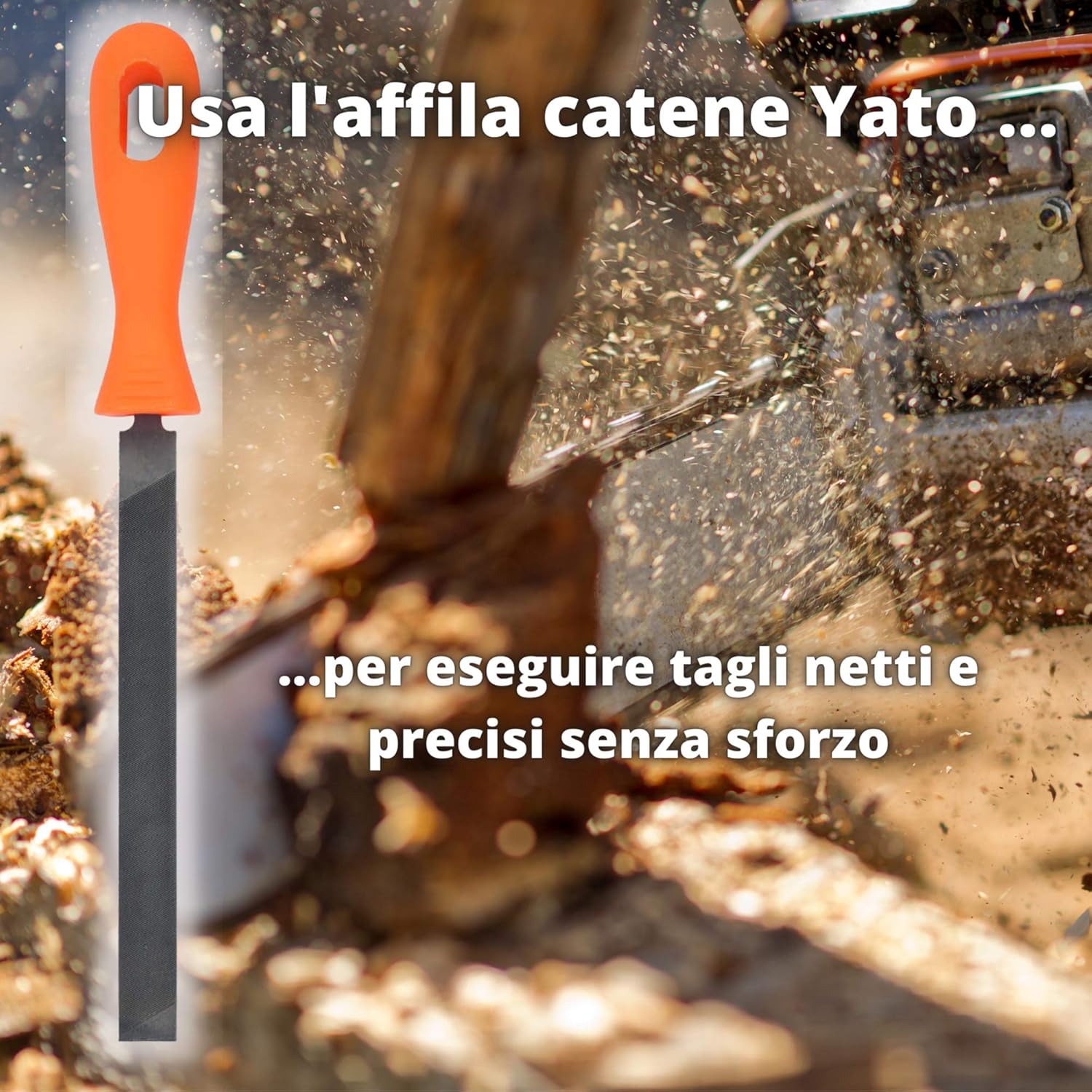
Image: The Yato file in use, sharpening a chainsaw chain for clean and precise cuts.

Image: Proper sharpening ensures the longevity and continuous operational performance of the chainsaw chain.

Imaj: La file's design is specifically engineered to fit various chain types, ensuring proper contact for sharpening.
6. Antretyen
Proper care of your Yato sharpening file will ensure its longevity and effectiveness.
- Netwaye a File: After each use, brush off any metal filings or debris from the file teeth using a wire brush. This prevents clogging and maintains cutting efficiency.
- Sere byen: Sere a file in a dry place to prevent rust. Consider using a file card or protective sleeve to prevent damage to the file teeth and to protect other tools.
- Evite jete: Dropping the file can damage its teeth, reducing its effectiveness.
- Ranplase lè li ize: A worn file will not sharpen effectively. Replace your file when its teeth become dull or clogged beyond cleaning.
NAN. Depanaj
If you encounter issues while sharpening, consider the following:
- Chain not getting sharp:
- Asire w la file is clean and not worn out.
- Verifye w ap itilize bon an file size for your chain.
- Check that you are applying consistent pressure and the correct angle.
- Ensure the depth gauges are set correctly.
- Chain cuts unevenly or pulls to one side:
- This often indicates uneven sharpening. Ensure all teeth are sharpened to the same length and angle.
- Check the depth gauges; if they are uneven, the chain will pull.
- File slips or doesn't grip:
- La file may be clogged with debris; clean it thoroughly.
- La file may be worn and needs replacement.
- Ensure the chain is securely held and not moving.
8. Espesifikasyon
| Mak | Yato |
| Nimewo Modèl | YT-85022 |
| Manifakti | Toya Sa |
| File Kalite | Round Chainsaw File |
| Travay Longè | 250 mm |
| Materyèl | Carbon Steel (File), Polypropylene (Handle) |
| Recommended Chain Sizes | 3/8" or 0.325" |
| Recommended Sharpening Angles | 30 ° ak 35 ° |
| Pwa atik | 70 g |
| Dimansyon pake | 32.6 x 7.2 x 2.4 cm |
9. Garanti ak sipò
For warranty information or technical support regarding your Yato Chainsaw Chain Sharpening File, please refer to the official Yato websit la oubyen kontakte détayan lokal ou a. Kenbe resi acha ou kòm prèv acha.


