
1. Entwodiksyon
The GODIYMODULES SMC05 is an integrated stepper and servo motor driver controller designed for precise control of motor rotation, speed, and angle. Featuring a 1.8-inch color screen and intuitive knob operation, this module supports a wide range of applications requiring accurate motor positioning and speed regulation. It offers multiple control modes and communication options for versatile integration into various systems.
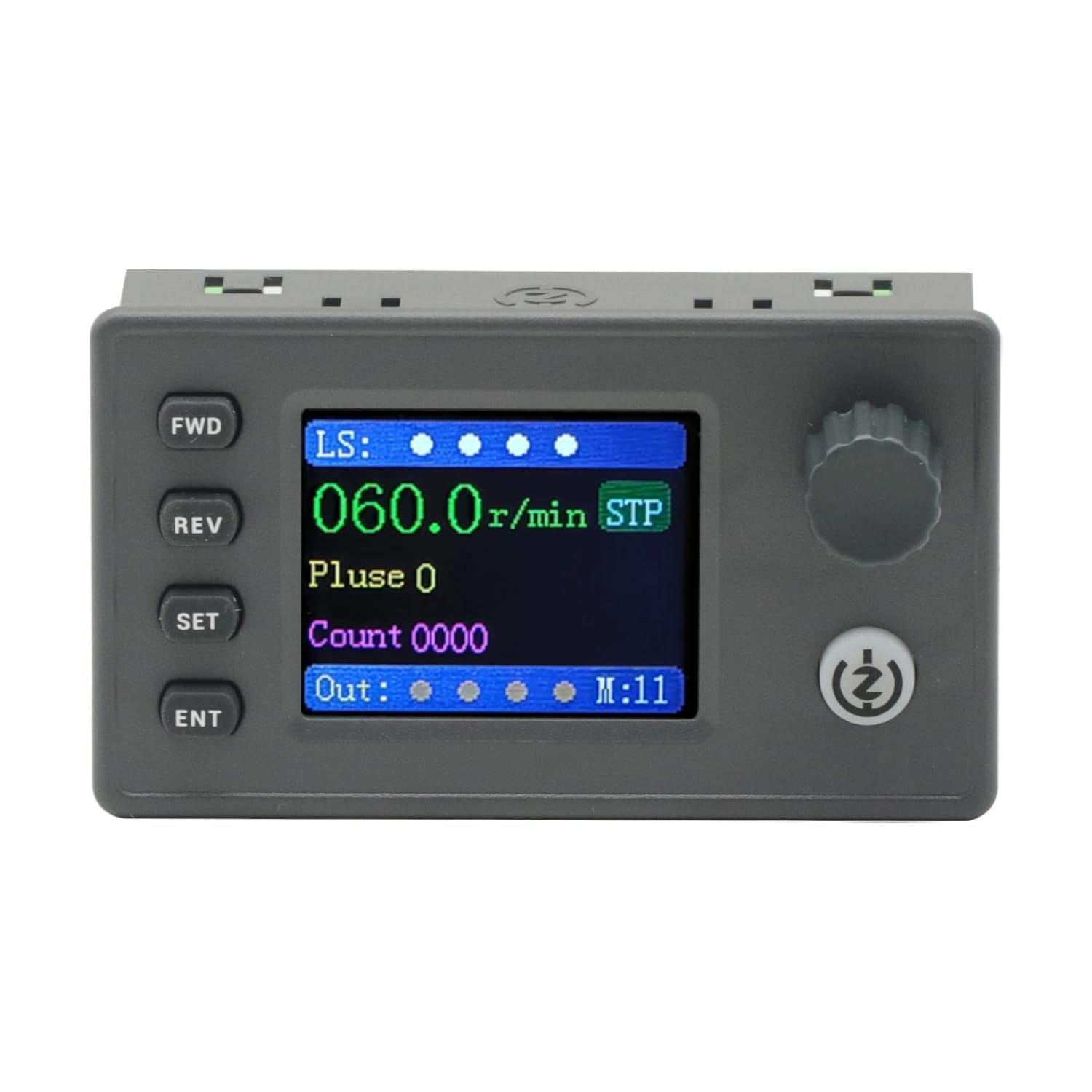
Figure 1: The SMC05 Stepper/Servo Motor Driver Controller, highlighting its 1.8-inch color screen, knob operation, and shortcut buttons.
2. Pwodwi Features
- Kontwòl entegre: Combines stepper motor driver and servo motor control functionalities.
- Wide Voltage Range: Operates with a working voltage nan 12-24V.
- Konsepsyon kontra enfòmèl ant: Product dimensions are 83x48x35.5mm.
- Siyal Sòti: Features 4 output channels with 0V output voltage.
- Siyal Antre: Includes 4 limit inputs and 3 extended key interfaces.
- High Pulse Frequency: Supports motor pulse frequencies from 1Hz to 200,000Hz.
- Ekspozisyon koulè: Equipped with a 1.8-inch color screen for clear information display.
- Pulsman Voltage: Motor pulse voltage is 0V output, collector output form.
- Kominikasyon: Supports Modbus protocol via serial port/485.
- Mòd miltip: Supports 20 different motion control modes.
- Sipò pou lang: Display in both Chinese and English.

Figure 2: Key features of the SMC05 controller, including support for various modes and input/output capabilities.
3. Enstalasyon ak Enstalasyon
3.1 Power Supply and Connections
Asire vol k ap travay latage is within the specified range of 12-24V DC. Connect the power supply to the designated terminals. The controller features various input and output interfaces for connecting limit switches, expansion buttons, and motor drives.

Figi 3: Detaye view of the SMC05 controller's extension interface, indicating connections for power, limit switches, expansion buttons, communication, and motor outputs.
3.2 Fil elektrik motè
Proper wiring of the stepper or servo motor drive is crucial for correct operation. Refer to the wiring diagrams provided to ensure all connections are secure and correctly aligned with the motor and power source.

Figi 4: Egzample wiring diagram for connecting the SMC05 controller to a microstep driver and a stepper motor.
4. Operasyon Enstriksyon
The SMC05 controller features a user-friendly interface with a 1.8-inch color screen, a rotary knob, and several control buttons for easy operation and parameter adjustment.
4.1 Kontwòl Panel Overview

Figure 5: Front panel layout of the SMC05 controller with labels for all buttons, the rotary knob, and display indicators.
- FWD Button: Initiates forward rotation.
- Bouton REV: Initiates reverse rotation.
- SET bouton: Enters the settings menu or exits current settings.
- ENT Button: Konfime seleksyon yo oubyen antre nan sou-meni yo.
- Bouton Rotary: Adjusts parameters such as speed, pulse count, and navigates menus.
- Kòmanse / Stop bouton: Starts or stops motor operation.
- Ekspozisyon ekran: Shows current speed, pulse count, motion mode, and various indicators.
4.2 Operasyon debaz
- Pouvwa sou: Connect the 12-24V DC power supply. The screen will light up.
- Anviwònman Paramèt: Peze a SET button to enter the settings menu. Use the rotary knob to navigate through options like Aksyon, Motè, ak Sistèm. Peze ENT pou chwazi.
- Adjusting Speed/Pulse: Nan la Aksyon or Motè settings, you can adjust parameters such as forward pulse, forward speed, reverse pulse, and reverse speed using the rotary knob.
- Starting Motor: Once parameters are set, press the Kòmanse/Stop button to begin motor operation. The motor will rotate according to the configured speed and direction.
- Chanje direksyon: Sèvi ak la FWD epi REV buttons to change the motor's rotation direction during operation.
- Stopping Motor: Peze a Kòmanse/Stop button again to halt motor movement.
4.3 Advanced Features Demonstration
The following video demonstrates various operational aspects and advanced features of the SMC05 controller, including interface navigation, stepper motor control, use of expansion buttons, limit switches, and output control, as well as servo motor drive integration.
Video 1: Demonstration of the SMC05 controller's interface, stepper motor drive, expansion button functionality, limit switch activation, output control, and servo motor drive operation.
5. Espesifikasyon
| Karakteristik | Spesifikasyon |
|---|---|
| Dimansyon pwodwi | 3.27 x 1.89 x 1.4 pous (83x48x35.5mm) |
| Pwa atik | 3.27 ons |
| Travay Voltage | 12-24V DC |
| Siyal Sòti | 4 channels, 0V output voltage |
| Siyal Antre | 4 limit inputs, 3 extended key interfaces |
| Frekans batman kè motè | 1Hz - 200,000Hz |
| Kalite ekspozisyon | 1.8-pous ekran koulè |
| Volim batman kè motètage | 0V output, collector output form |
| Pwotokòl kominikasyon | Modbus (serial port/485) |
| Konpozan ki enkli | 1PCS SMC05 Controller |
6. Antretyen
To ensure the longevity and optimal performance of your SMC05 controller, follow these maintenance guidelines:
- Kenbe aparèy la pwòp epi san pousyè ak debri. Sèvi ak yon twal mou epi sèk pou netwaye.
- Evite ekspoze kontwolè a nan tanperati ekstrèm, imidite, oswa limyè solèy dirèk.
- Ensure all connections are secure and free from corrosion. Periodically check wiring for any signs of wear or damage.
- Pa eseye louvri c la.asing oubyen modifye konpozan entèn yo, paske sa ka anile garanti a epi lakòz domaj.
NAN. Depanaj
If you encounter issues with your SMC05 controller, refer to the following common troubleshooting steps:
- Pa gen pouvwa: Check the power supply connection and ensure it provides the correct voltage (12-24V DC). Verify the power adapter is functioning.
- Motè a pa deplase:
- Ensure the motor is correctly wired to the driver and the driver to the controller.
- Check if the motor parameters (speed, pulse) are set correctly on the controller.
- Verify that the Start/Stop button has been pressed to initiate movement.
- Check for any active limit switch inputs that might be preventing movement.
- Incorrect Speed/Direction: Review the speed and direction settings in the controller's menu. Ensure the FWD/REV buttons are used appropriately.
- Pwoblèm ekspozisyon: If the screen is blank or shows errors, try restarting the device. If the problem persists, contact support.
- Communication Errors (Modbus): Verify the serial port/485 connections and ensure the communication parameters (baud rate, parity, etc.) are correctly configured on both the controller and the connected device.
For persistent issues not resolved by these steps, please contact GODIYMODULES customer support.
8. Garanti ak sipò
Information regarding specific warranty terms for the GODIYMODULES SMC05 controller is not available in the provided product data. Please refer to the product packaging or the manufacturer's official websit pou enfòmasyon detaye sou garanti.
For technical support, troubleshooting assistance, or inquiries about the product, please contact GODIYMODULES customer service through their official channels.