
1. Entwodiksyon
This manual provides important information regarding the installation, operation, and maintenance of your GBC iSnatch Carbon Monoxide (CO) Detector. Please read this manual thoroughly before using the device and retain it for future reference.
Carbon monoxide is a colorless, odorless, and tasteless gas that can be fatal. This detector is designed to monitor CO levels and alert you to potentially dangerous concentrations, helping to protect your household.
This CO detector complies with the EN50291-1 standard, ensuring its suitability for household use.
2. Enfòmasyon sou Sekirite ak Avètisman
Enpòtan: This device is designed to detect carbon monoxide gas. It is not designed to detect smoke, fire, or other gases. It is not a substitute for proper maintenance of fuel-burning appliances, including ventilation and exhaust systems.
- Do not paint the detector. Paint can clog the sensor openings and interfere with the detector's ability to detect CO.
- Do not block the ventilation openings on the detector.
- Test the detector regularly using the test button.
- Replace batteries promptly when the low battery warning is indicated.
- Pa enstale li nan zòn ki gen anpil imidite, tanperati ekstrèm, oswa twòp pousyè.
- Kenbe soti nan atenn timoun yo.
3. Pake kontni
Verifye ke tout atik yo prezan nan pakè a:
- GBC iSnatch Carbon Monoxide Detector (Model 64051105)
- Manyèl itilizatè
4. Pwodwi souview
The GBC iSnatch Carbon Monoxide Detector features a compact design with an integrated LCD display and indicator lights for easy monitoring.
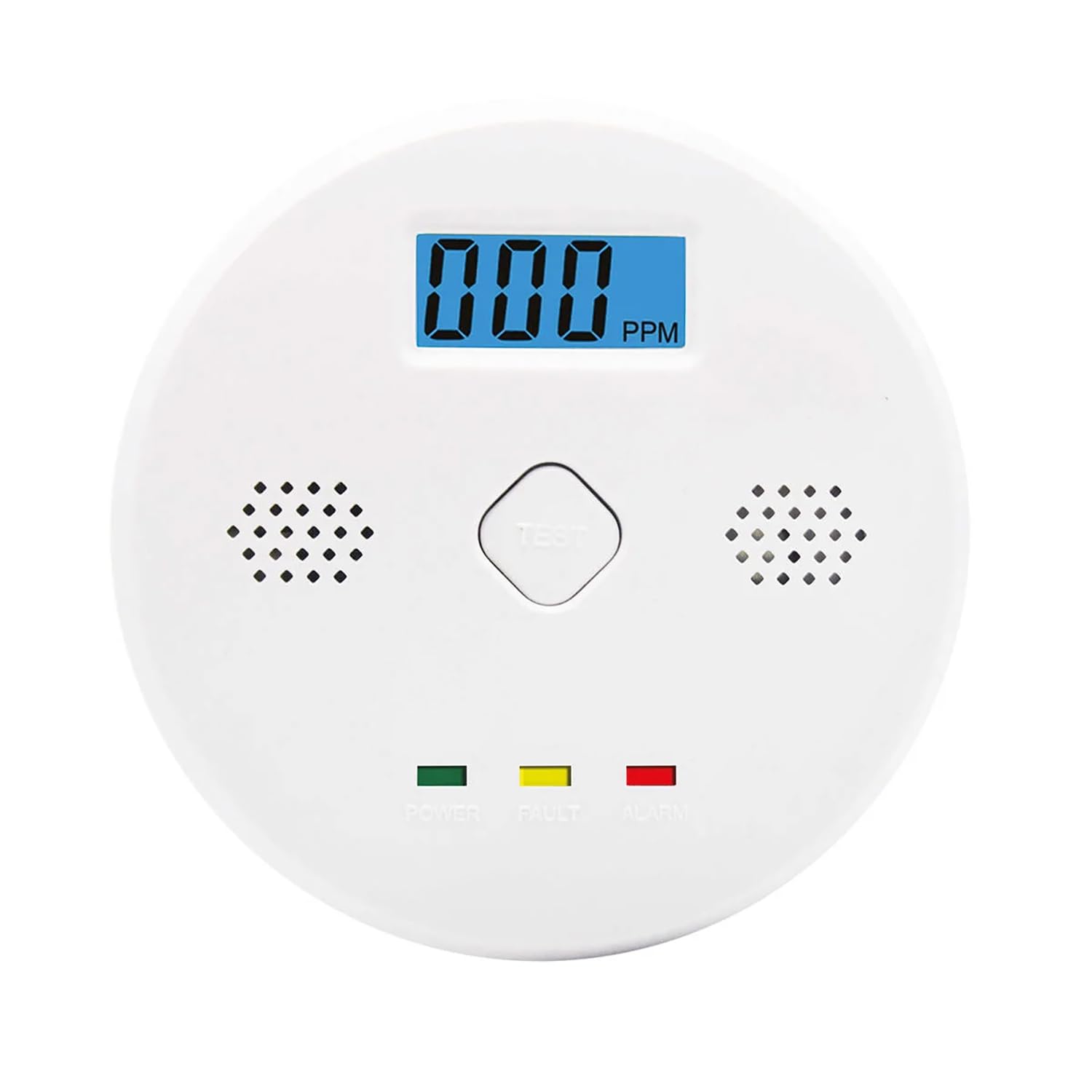
Figi 1: Devan view of the GBC iSnatch Carbon Monoxide Detector. It features a central digital display showing PPM (parts per million) of CO, a 'TEST' button, and three indicator lights at the bottom: 'POWER' (green), 'FAULT' (yellow), and 'ALARM' (red). Speaker grilles are visible on both sides of the display.
- Ekspozisyon LCD: Shows real-time CO concentration in PPM (Parts Per Million).
- Bouton tès: Used to verify the sensor and alarm functionality.
- Endikatè pouvwa (LED vèt): Illuminates when the device is powered on and functioning correctly.
- Fault Indicator (Yellow LED): Illuminates to indicate a fault or low battery condition.
- Endikatè Alam (LED wouj): Flashes when a CO alarm condition is detected.
- Sirèn 85 dB: Emits a loud audible alarm during a CO event.
5. Enstalasyon ak Enstalasyon
5.1 Enstalasyon batri
The detector operates on 1 x 9V battery (not included). Ensure the battery is installed correctly before use.
- Locate the battery compartment cover on the back of the detector.
- Louvri lòj batri a.
- Insert one 9V battery, observing the correct polarity (+/-).
- Fèmen kouvèti lòj batri a byen.
- Upon successful battery installation, the detector will perform a self-test, and the green POWER LED should illuminate.
5.2 Chwazi yon kote enstalasyon
For optimal performance and safety, consider the following when choosing a location:
- Install at least one CO detector on each level of your home, especially near sleeping areas.
- Place the detector at a height where it can be easily seen and heard, typically at eye level or higher.
- Avoid installing near fuel-burning appliances (furnaces, water heaters, stoves) to prevent nuisance alarms from normal operation.
- Do not install in direct sunlight, near windows or doors, or in areas with strong drafts, as this can affect sensor accuracy.
- Maintain a distance of at least 1.5 meters (5 feet) from any cooking or heating appliance.
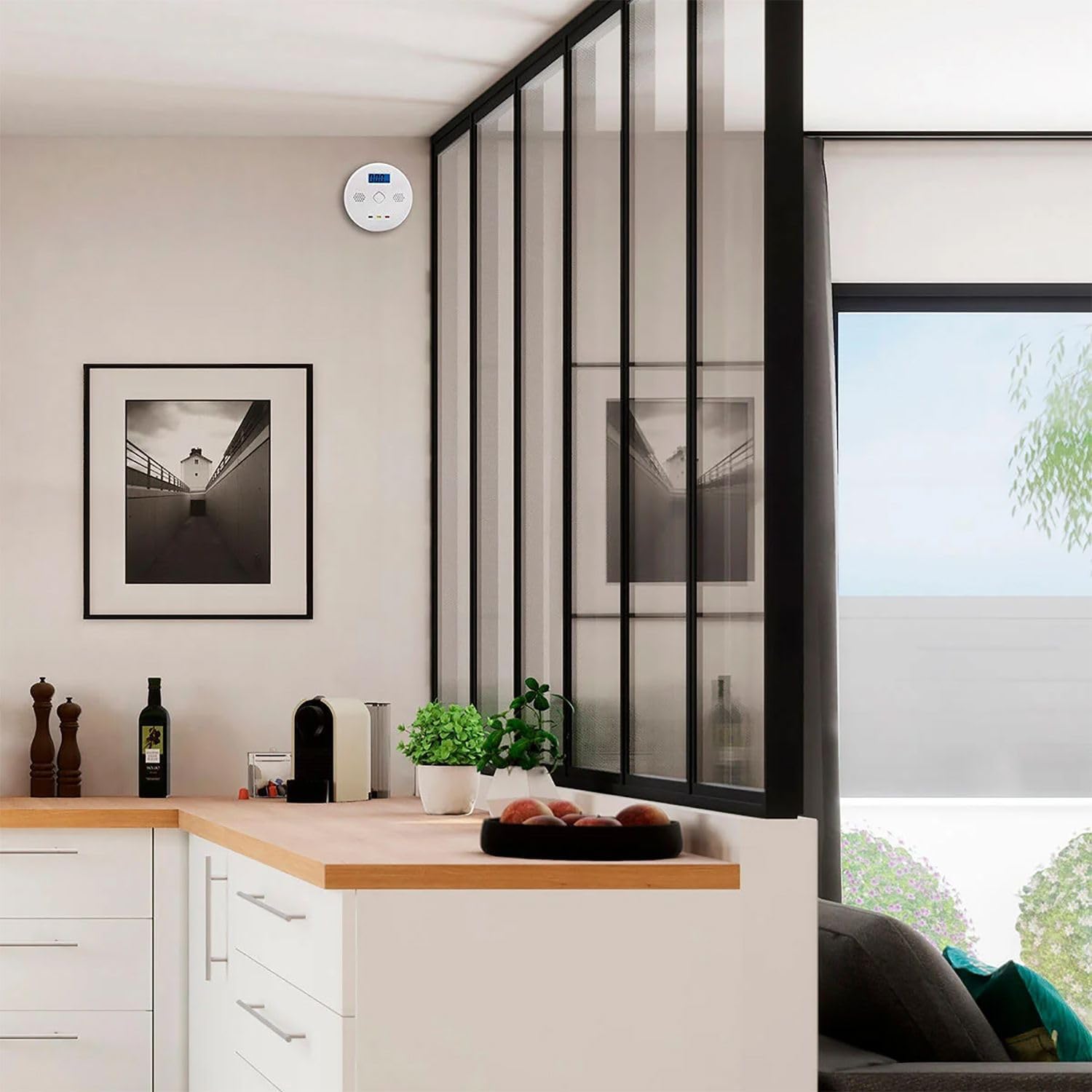
Figi 2: Example installation of the CO detector on a wall in a kitchen area, demonstrating a suitable mounting height.
5.3 Enstalasyon Detektè a
Once you have selected an appropriate location:
- Make pozisyon enstalasyon ou vle a sou miray la.
- Drill two holes at the marked positions.
- Mete ploge miray yo (si sa nesesè) nan twou yo te fè yo.
- Screw the mounting screws into the wall, leaving a small gap for the detector to hang.
- Align the mounting slots on the back of the detector with the screws and slide the detector down to secure it.
- Asire w detektè a byen tache ak miray la.
6. Operasyon Enstriksyon
6.1 pouvwa sou
After battery installation, the detector will automatically power on. The green POWER LED will light up, and the LCD display will show "0 PPM" or cycle through a brief startup sequence.
6.2 Operasyon Nòmal
During normal operation, the green POWER LED will remain steadily lit, and the LCD display will show "0 PPM" if no CO is detected, or the current CO concentration if present.
6.3 Fonksyon tès
It is recommended to test the detector weekly to ensure proper functionality.
- Press and hold the "TEST" button located on the front of the detector.
- The detector will emit a series of loud beeps (85 dB siren), and the red ALARM LED will flash. The LCD display may show a test value.
- Release the button. The detector should return to normal operation.
- If the detector does not respond as described, refer to the Troubleshooting section.
7. Alarm Conditions and Actions
The detector is designed to alarm at specific CO concentrations and durations as per EN50291-1:
- 50 PPM: Alarm within 60-90 minutes.
- 100 PPM: Alarm within 10-40 minutes.
- 300 PPM: Alarm within 3 minutes.
When a CO alarm occurs:
- The 85 dB siren will sound repeatedly.
- The red ALARM LED will flash rapidly.
- The LCD display will show the detected CO concentration in PPM.
What to do if the alarm sounds:
- Evacuate Immediately: Move everyone, including pets, to fresh air outdoors.
- Do Not Re-enter: Do not re-enter the premises until the CO source has been identified and corrected, and the area has been thoroughly ventilated.
- Rele sèvis ijans yo: Contact your local emergency services or fire department.
- Identify Source: After the area is safe, have a qualified technician inspect all fuel-burning appliances and chimneys for proper operation and ventilation.
8. Antretyen
8.1 Tès Regilye
Test the detector weekly by pressing the "TEST" button as described in Section 6.3.
8.2 Ranplasman batri
The detector will indicate a low battery condition by flashing the yellow FAULT LED and possibly emitting a chirp sound. Replace the 9V battery immediately when this occurs. Refer to Section 5.1 for battery installation instructions.
8.3 Netwayaj
Clean the detector regularly to prevent dust buildup from affecting its performance.
- Sèvi ak yon mou, damp twal pou siye deyò detektè a.
- Do not use cleaning agents, solvents, or abrasive materials.
- Do not spray air fresheners, hairspray, or other aerosols near the detector.
- Gently vacuum around the sensor openings to remove dust.
NAN. Depanaj
| Pwoblèm | Kòz posib | Solisyon |
|---|---|---|
| Detektè a pa limen. | No battery or incorrect battery installation. | Install a fresh 9V battery, ensuring correct polarity. |
| Yellow FAULT LED flashes / Chirping sound. | Batri ki ba. | Ranplase pil 9V la imedyatman. |
| Alarm sounds without visible CO source. | False alarm due to interference or sensor issue. | Ventilate the area. If alarm persists, evacuate and contact emergency services. Ensure detector is not near sources of fumes or high humidity. |
| Test button does not activate alarm. | Faulty sensor or internal malfunction. | Ensure battery is fresh. If problem persists, the unit may need replacement. |
10. Espesifikasyon
| Nimewo Modèl | 64051105 |
| Mak | GBC |
| Kalite Capteur | Elektwochimik Monoksid Kabòn |
| Sous pouvwa | 1 x 9V Batri |
| Volim Alam | 85 dB nan 1 mèt |
| Alarm Thresholds (PPM) | 50 PPM (60-90 min), 100 PPM (10-40 min), 300 PPM (within 3 min) |
| Ekspozisyon | LCD, real-time CO concentration |
| Dimansyon pwodwi | 9.6 x 9.6 x 3.5 cm (3.78 x 3.78 x 1.38 pous) |
| Pwa | 200 g (0.44 lbs) |
| Konfòmite | EN50291-1 |
| Materyèl | Plastik |
11. Garanti ak sipò
Pou enfòmasyon sou garanti a oswa sipò teknik, tanpri al gade enfòmasyon kontak yo te bay nan men revandè w la oswa nan men reprezantan ofisyèl manifakti a. websit la. Kenbe resi acha ou kòm prèv acha.
This product is designed for a specific lifespan. It is recommended to replace the CO detector after 7-10 years from the manufacturing date, or as indicated by the device's end-of-life signal, to ensure continued accuracy and reliability.