
1. Pwodwi souview
The LCLCTC LC108 is an intelligent PID temperature controller designed for precise temperature regulation in various industrial and scientific applications. It features a clear LCD display, supports multiple thermocouple (TC) and RTD inputs, and provides SSR output for control. Equipped with RS-485 Modbus-RTU communication, it allows for integration into larger control systems. This manual provides essential information for the safe and effective installation, operation, and maintenance of your LC108 temperature controller.

Figure 1: LCLCTC LC108 PID Temperature Controller, Solid State Relay (SSR), and K-Type Thermocouple Sensor.
2. Karakteristik kle
- Pwovizyon pou pouvwa: Operates on 85~265VAC, 50~60Hz.
- Gwosè panèl: Compact 48x48mm design for easy integration.
- Kalite Antre: Supports various Thermocouple (K, J, E, T, S) and RTD (PT100, Cu100, Cu50) inputs, selectable via menu.
- Sòti: SSR (Solid State Relay) output for precise control.
- Alam yo: Features up to 2 configurable alarms.
- Kominikasyon: Integrated RS-485 Modbus-RTU for data exchange and remote control.
- Presizyon: High precision with 0.2% F.S. (Full Scale) accuracy.
- SampLing tan: Fast 0.5 second samppousantaj ling.
- Anviwònman: Designed for operation in 0-50℃ with humidity less than 85% (non-condensing).

Figure 2: The LC108 controller supports RS485 communication, making it compatible with various upstream equipment for integrated control systems.
3. Pake kontni
Verifye ke tout atik yo prezan epi yo pa domaje lè w ap ouvri pake a:
- 1 x LCLCTC LC108 PID Temperature Controller
- 1 x SSR 40DA Solid State Relay
- 1 x K-Type Thermocouple Sensor
- 1 x Manyèl Enstriksyon (dokiman sa a)
4. Espesifikasyon
| Atribi | Valè |
|---|---|
| Kalite ekspozisyon | LCD |
| Tanperati Fonksyònman | 0-50 Degre Sèlsiyis |
| UPC | 735373853112 |
| Manifakti | LCLCTC |
| Product Dimensions (Controller) | 1.89"L x 1.89"W x 1.89"H (48x48x48mm) |
| Item Weight (Controller) | 5.75 ons (163g) |
| ASIN | B0CCKQPQCS |
| Peyi orijin | Lachin |
| Voltage | 85-265 Volts AC |
| Koulè | Gri |
| Konpozan ki enkli | Controller, SSR, Sensor |
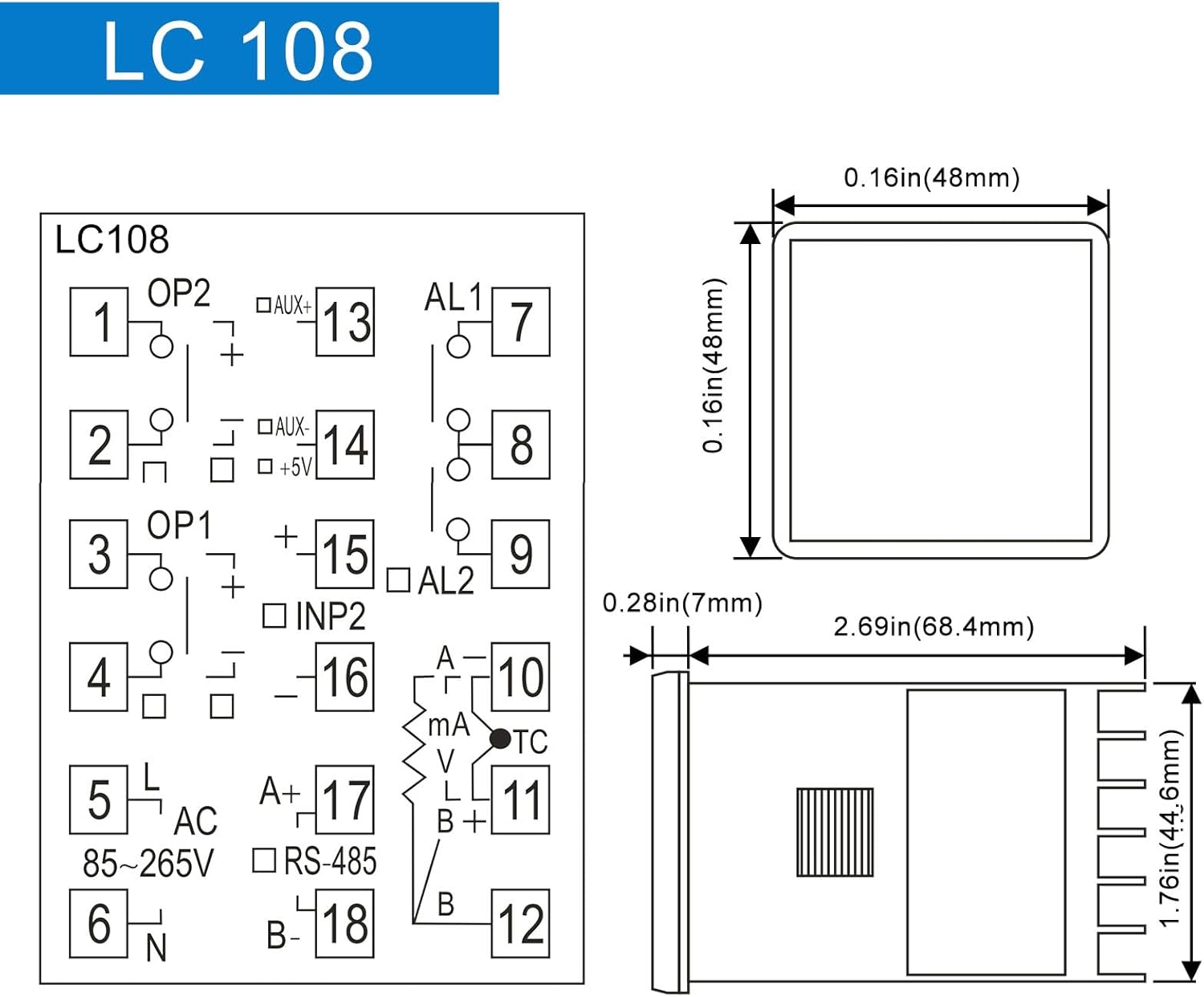
Figure 3: LC108 Controller Dimensions and Basic Pinout Diagram.

Figure 4: Dimensions and Specifications for the Solid State Relay (SSR) and K-Type Thermocouple Probe.
5. Enstalasyon ak Enstalasyon
Sekirite Premye: Ensure all power is disconnected before attempting any wiring or installation. Improper wiring can lead to electric shock or damage to the device.
5.1 Monte kontwolè a
The LC108 controller is designed for panel mounting. Cut a square opening of 45x45mm (1.77x1.77 inches) in your control panel. Insert the controller from the front and secure it using the provided mounting brackets from the rear.
5.2 Dyagram fil elektrik
Refer to the wiring diagram below for connecting the power supply, sensor, SSR, and alarm outputs. Ensure correct polarity and secure connections for reliable operation.
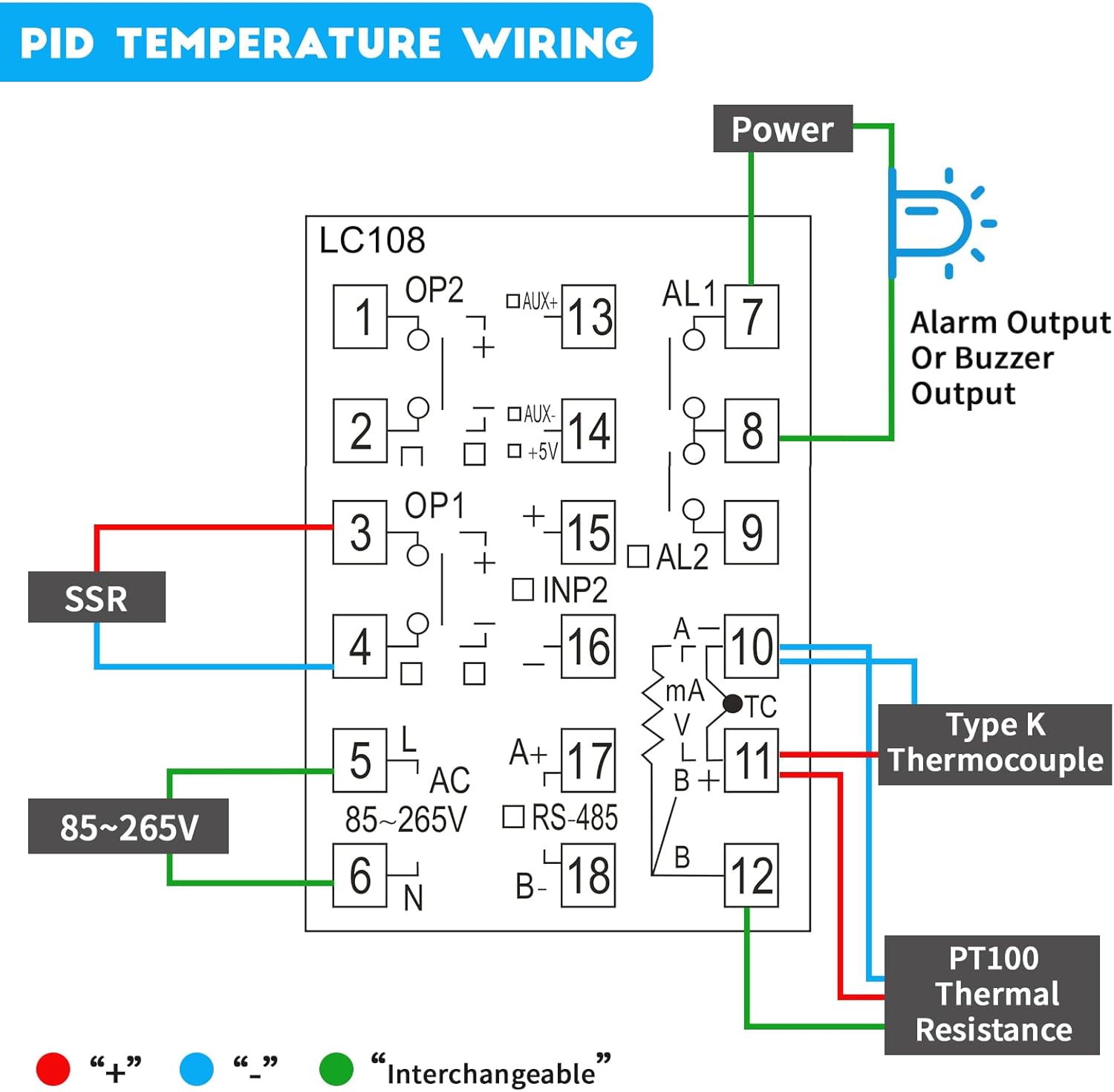
Figure 5: Detailed PID Temperature Controller Wiring Diagram. Connect power to terminals 5 and 6 (85-265V AC). Connect the SSR to terminals 3 and 4. Connect the Type K Thermocouple to terminals 10 and 11. PT100 Thermal Resistance connects to terminals 10, 11, and 12. Alarm output connects to terminals 7 and 8.
- Power Input (AC 85-265V): Connect to terminals 5 (L) and 6 (N).
- Sòti SSR: Connect the control terminals of the Solid State Relay to terminals 3 (OP1+) and 4 (OP1-).
- Thermocouple/RTD Input:
- For K-Type Thermocouple: Connect to terminals 10 (TC+) and 11 (TC-).
- For PT100 RTD: Connect to terminals 10, 11, and 12 (refer to diagram for specific connections).
- Sòti alam: Connect alarm devices (e.g., buzzer, indicator light) to terminals 7 (AL1) and 8 (AL1).
- Kominikasyon RS-485: Connect A+ to terminal 17 and B- to terminal 18 for Modbus communication.
6. Operasyon Enstriksyon
6.1 Limen ak Premye Afichaj
Once wired correctly, apply power. The controller will perform a self-test and then display the Process Value (PV) and Set Value (SV) on the LCD. PV indicates the current measured temperature, and SV is the desired temperature setpoint.
6.2 Setting the Temperature Setpoint (SV)
- Peze a SET button briefly. The SV display will start flashing.
- Sèvi ak la ▲ (moute) ak ▼ (down) arrow buttons to adjust the SV to your desired temperature.
- Peze SET again to confirm the new setpoint. The SV display will stop flashing.
6.3 Paramèt Konfigirasyon
The LC108 has various parameters for advanced configuration (e.g., input type, control mode, alarm settings, PID parameters). To access these:
- Peze epi kenbe la SET button for approximately 3-5 seconds to enter the parameter setting menu.
- Sèvi ak la SET button to cycle through different parameters.
- Sèvi ak la ▲ epi ▼ buttons to change the value of the selected parameter.
- Peze epi kenbe SET again to save changes and exit the parameter menu, or wait for the controller to automatically exit after a period of inactivity.
Note: Refer to the detailed parameter list in the full technical manual (if available) for specific parameter codes and their functions. Incorrect parameter settings can lead to improper operation.
7. Antretyen
The LC108 PID Temperature Controller is designed for long-term, reliable operation with minimal maintenance. However, periodic checks can ensure optimal performance:
- Netwayaj: Gently wipe the display and panel with a soft, dry cloth. Do not use abrasive cleaners or solvents.
- Koneksyon: Periodically check all wiring connections to ensure they are secure and free from corrosion. Loose connections can cause erratic readings or control issues.
- Anviwònman: Ensure the operating environment remains within specified temperature and humidity ranges to prevent damage to internal components. Avoid excessive dust or moisture.
- Tcheke Capteur: If temperature readings become inaccurate, inspect the thermocouple or RTD sensor for physical damage or degradation.
NAN. Depanaj
| Pwoblèm | Kòz posib | Solisyon |
|---|---|---|
| Kontwolè pa limen. | Pa gen kouran; fil elektrik ki pa kòrèk. | Check power connections (terminals 5 & 6) and ensure voltage is within 85-265VAC. Verify power source is active. |
| Inaccurate temperature reading (PV). | Incorrect sensor type selected; faulty sensor; loose sensor connection. | Verify the input type setting matches your sensor (K, PT100, etc.). Check sensor wiring to terminals 10, 11, 12. Replace sensor if damaged. |
| Output (SSR) not activating. | Incorrect control mode; SV not set correctly; faulty SSR; incorrect SSR wiring. | Check control mode settings. Ensure SV is set appropriately. Verify SSR wiring to terminals 3 & 4. Test SSR functionality. Note: Some SSRs require an external power supply for their control circuit if the controller's output is insufficient. |
| RS-485 communication issues. | Incorrect wiring (A+/B-); wrong communication parameters (baud rate, parity); address conflict. | Verify A+ and B- connections to terminals 17 & 18. Check communication settings in the controller and master device. Ensure unique Modbus addresses. |
| Controller displays "HHHH" or "LLLL". | Sensor open circuit (HHHH) or short circuit (LLLL) / out of range. | Check sensor wiring for breaks or shorts. Ensure sensor is within its specified temperature range. Replace sensor if necessary. |
9. Garanti ak sipò
LCLCTC products are manufactured to high quality standards. For warranty information, technical support, or service inquiries, please contact your original point of purchase or the manufacturer directly through their official website. Please have your product model number (LC108) and purchase details ready when contacting support.
For further assistance, you may refer to the manufacturer's online resources or contact their customer service department.