
1. Entwodiksyon
The Secukey SK1-W is a robust, standalone access control system designed for secure entry management. Featuring RFID and PIN access, an integrated door opener relay, and an IP66-rated anti-vandal zinc alloy casing, this device is suitable for both indoor and outdoor applications. This manual provides detailed instructions for installation, operation, and maintenance to ensure optimal performance and security.
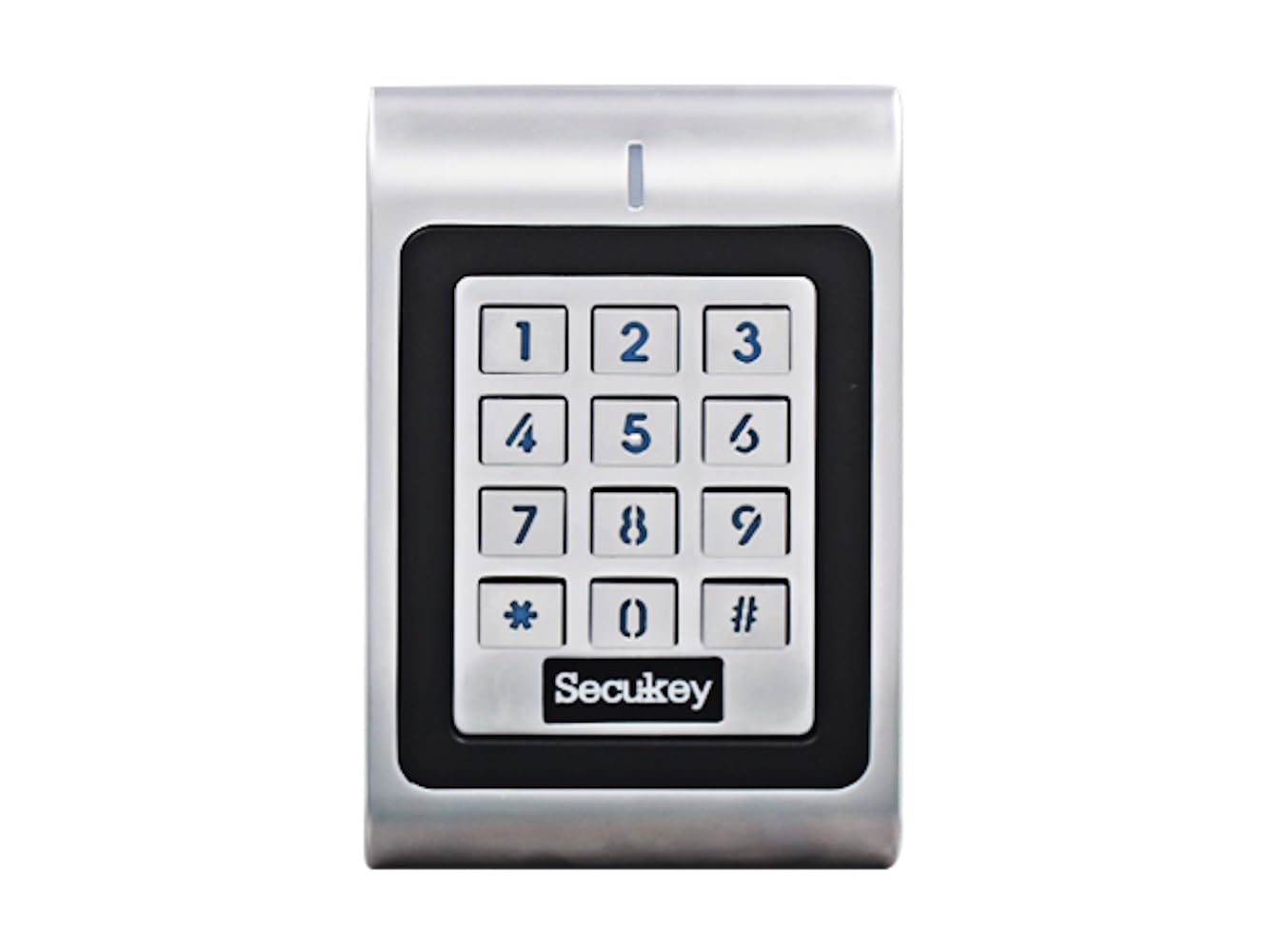
Devan view of the Secukey SK1-W access control device, featuring a numeric keypad and an integrated card reader.

Angle view of the Secukey SK1-W access control unit, highlighting its compact design and silver finish.
2. Karakteristik kle
- Konstriksyon dirab: IP66 waterproof and anti-vandal zinc alloy casing.
- Kapasite itilizatè: Sipòte jiska 1000 itilizatè.
- Mòd aksè miltip: Card only, PIN only, or Card + PIN.
- Adjustable Relay Output: Programmable from 1 to 99 seconds (default 5 seconds).
- Adjustable Alarm Output: Programmable from 1 to 3 minutes (default 1 minute).
- Wiegand Entèfas: 26-bit input/output for external devices (e.g., exit button, external alarm).
- Latch Mode: Functionality to hold a door or gate open.
- Klavye ki eklere: Vizibilite amelyore nan kondisyon ki pa twò klere.
- Wide Voltage Range: Compatible with 12-24V DC / 12-18V AC power supplies.
- Wide Tanperati Fonksyònman: Functions reliably from -40°C to 60°C (-40°F to 140°F).

Yon imaj k ap montreasing the robust features of the SK1-W, including its -40°C resistance, IP66 waterproof rating, and wide voltage range of 12-28 Volts AC/DC.
3. Espesifikasyon
| Karakteristik | Spesifikasyon |
|---|---|
| Dimansyon pwodwi (H x W x P) | 12.0 x 7.6 x 2.5 cm |
| Pwa | 600 g |
| Materyèl | Zinc Alloy with Powder Coating |
| Pwovizyon pou pouvwa | 12-24V DC / 12-18V AC (Power supply not included) |
| Fèmen pòt Sòti chaj | 3 Amperes max |
| Chaj Sòti Alam | 3 Amperes max |
| Kapasite itilizatè | Jiska 1000 itilizatè |
| Longè Kòd PIN | 4 a 6 chif |
| Kalite kat | 125 KHz EM Card (13.56MHz Mifare also supported as per image) |
| Wiegand Entèfas | 26-bit Input & Output |
| Tanperati Fonksyònman | -40 ° C a 60 ° C (-40 ° F a 140 ° F) |
| Operasyon Imidite | 10% ~ 90% (ki pa kondanse) |
4. Enstalasyon ak fil elektrik
Proper installation and wiring are crucial for the functionality and safety of the SK1-W system. Ensure all connections are secure and follow local electrical codes.
4.1 Montaj
Mount the device on a flat, stable surface at a convenient height for users. Consider the device dimensions (12.0H x 7.6W x 2.5D cm) when selecting a mounting location. The IP66 rating allows for outdoor installation.
4.2 Dyagram fil elektrik
Refer to the diagrams below for connecting the SK1-W to your power supply, lock, and alarm systems. A 1N4004 diode (included in packing) or equivalent is required when using a common power supply to prevent damage to the reader.

Detailed wiring diagrams for the Secukey SK1-W. The top diagram shows common power supply connections, while the bottom diagram illustrates access control power supply connections. Both include keypad, lock, and alarm wiring, with a note on the required 1N4004 diode.
Enpòtan: Ensure the power supply is disconnected before performing any wiring to prevent electrical shock or damage to the device.
5. Operasyon Enstriksyon
The SK1-W supports various operating modes and user management functions. The device comes with a Master Add Card and a Master Delete Card for initial setup and user management.
5.1 Jesyon itilizatè
The system can manage up to 1000 users. Users can be added or deleted using the Master Add Card and Master Delete Card, or through specific programming sequences via the keypad.

An image illustrating the Secukey SK1-W access control unit in use, showing a hand presenting an EM card for access. Text indicates user types (Card, PIN) and supported card types (125KHz EM, 13.56MHz Mifare).
5.2 Access Modes
The SK1-W offers three primary access modes:
- Card Only: Access granted by presenting a valid EM card.
- PIN Only: Access granted by entering a valid 4-6 digit PIN code.
- Card + PIN: Access granted by presenting a valid EM card followed by entering a valid PIN code.
5.3 Anviwònman Sistèm
- Relay Output Time: The duration the door relay remains active can be set from 1 to 99 seconds.
- Alarm Output Time: The duration of the alarm output can be set from 1 to 3 minutes.
- Kontwòl ekleraj: The keypad backlight and LED status can be toggled ON or OFF.
- Latch Mode: Activate this mode to keep the door or gate continuously open until manually deactivated.

The Secukey SK1-W access control unit with its backlit keypad illuminated, demonstrating the adjustable LED status feature for visibility in various lighting conditions.
5.4 Operating Modes Diagram
The SK1-W can function in three distinct modes, as illustrated below:

A diagram illustrating the three main operating modes of the SK1-W: Standalone Mode, Controller Mode, and Reader Mode (with LED and Buzzer Output), and their interconnections via Wiegand D0 & D1.
- Mòd otonòm: The device operates independently, managing users and access directly.
- Mòd kontwolè: The device acts as a controller for other Wiegand readers.
- Reader Mode with LED & Buzzer Output: The device functions as a Wiegand reader, providing LED and buzzer feedback.
6. Antretyen
To ensure the longevity and reliable operation of your Secukey SK1-W access control system, follow these maintenance guidelines:
- Netwayaj: Siye aparèy la regilyèman avèk yon twal mou,amp cloth. Avoid abrasive cleaners or solvents that could damage the casing or keypad.
- Kondisyon anviwònman: While the device is IP66 rated, avoid prolonged exposure to extreme conditions beyond its specified operating temperature and humidity ranges.
- Enspeksyon kab: Periodically check all wiring connections for signs of wear, corrosion, or damage. Ensure all connections remain secure.
- Mizajou mikrolojisyèl: Tcheke manifakti a websit la pou nenpòt mizajou firmwèr ki disponib ki ka amelyore pèfòmans oswa ajoute nouvo fonksyonalite.
NAN. Depanaj
If you encounter issues with your SK1-W system, refer to the following common problems and solutions:
- Aparèy pa limen:
- Check the power supply connections and ensure the correct voltage (12-24V DC / 12-18V AC) is being supplied.
- Verify that the power supply unit is functional.
- Access Denied (Valid Card/PIN):
- Ensure the card or PIN is correctly programmed into the system.
- Check the access mode setting (Card Only, PIN Only, Card + PIN) to ensure it matches the user's attempt.
- If using Card + PIN, ensure both are entered correctly in sequence.
- Pòt la pa debloke:
- Verify the lock wiring connections are correct and secure.
- Check the relay output time setting; it might be too short.
- Ensure the lock itself is functional and receiving power.
- Klavye a pa reponn:
- Check for any physical damage to the keypad.
- Asire w ke aparèy la ap resevwa ase kouran.
If these steps do not resolve the issue, please contact Secukey customer support for further assistance.
8. Garanti ak sipò
The Secukey SK1-W access control system is covered by a manufacturer's warranty. Please refer to the warranty card included with your product or visit the official Secukey websit la pou wè tèm ak kondisyon garanti detaye yo.
For technical support, troubleshooting assistance, or inquiries regarding your product, please contact Secukey customer service through their official websit la oswa enfòmasyon kontak ki nan anbalaj pwodwi ou a.