
1. Pwodwi souview
The Excelvan Wireless Weather Station (Model AOK-5061A) is designed to provide accurate indoor and outdoor temperature and humidity readings, along with weather forecasts and an alarm clock function. It features a large, colorful LCD display with LED backlight for easy readability.
Karakteristik kle:
- Indoor/Outdoor Temperature and Humidity Measurement
- Weather Forecast with 5 Icons (Sunny, Partially Sunny, Cloudy, Rain, Heavy Rain)
- DCF Radio-Controlled Clock with Manual Setting
- Alarm with Snooze Function
- Large Color LCD Display with LED Backlight
- DST (Daylight Saving Time) Automatic Update
- Wireless Outdoor Sensor with up to 50m range

Figi 1: Devan view of the Excelvan Wireless Weather Station main unit, displaying weather forecast, outdoor/indoor temperature and humidity, and time.
2. Gid Enstalasyon
2.1 Kontni pake a
Anvan ou kontinye ak enstalasyon an, asire w ke tout bagay yo prezan nan pake a:
- 1 x Estasyon Meteyo prensipal inite
- 1 x Capteur remote san fil
- 1 x AC pouvwa adaptè
- 1 x manyèl itilizatè

Figure 2: The complete package contents, including the main weather station unit, wireless remote sensor, power adapter, and user manual.
2.2 Alimante Inite Prensipal la
- Battery Installation (Optional): Open the battery compartment on the back of the main unit. Insert 3 x 1.5V AA batteries (not included), ensuring correct polarity. The LED backlight will stay on for 5 minutes when powered by batteries.
- AC Power Adapter (Recommended): For continuous backlight, connect the provided AC power adapter (4.5V, 150mA) to the main unit's power input and then plug it into a wall outlet.

Figi 3: Dèyè view of the main unit showing the battery compartment with the cover removed, ready for battery insertion.

Figi 4: Dèyè view of the main unit with the AC power adapter connected, illustrating the power input port.
2.3 Powering the Wireless Remote Sensor
- Open the battery compartment of the wireless remote sensor.
- Insert 2 x 1.5V AAA batteries (not included), ensuring correct polarity.
- Fèmen lòj batri a byen.

Figure 5: The wireless remote sensor, showing its display and the battery compartment on the back.
2.4 Capteur plasman
- The main unit is intended for indoor use only.
- Place the wireless remote sensor outdoors in a sheltered area, away from direct sunlight and rain, to ensure accurate readings.
- Ensure the sensor is within 50 meters (open space) of the main unit for optimal signal reception.
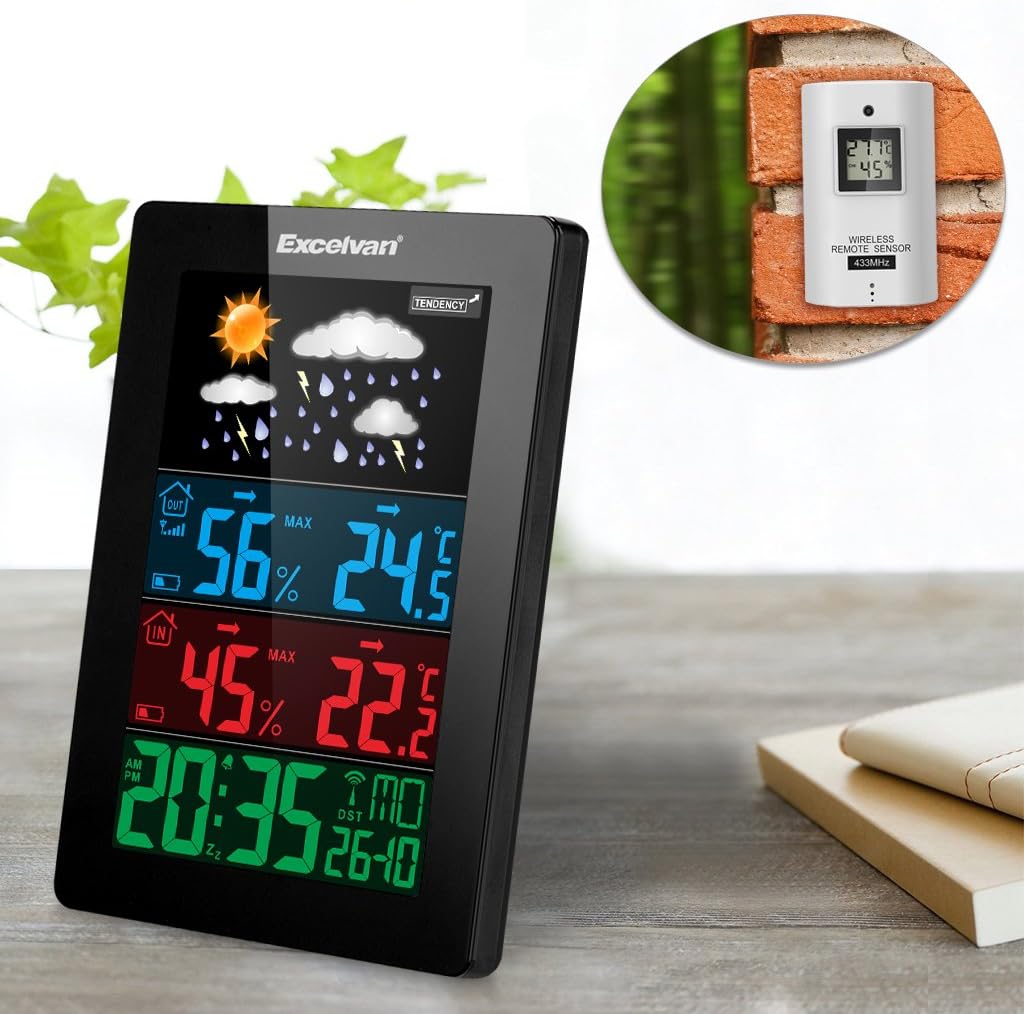
Figure 6: An illustration showing the main weather station unit indoors and the wireless remote sensor mounted on an outdoor wall.

Figure 7: A diagram highlighting the effective wireless transmission distance of 50 meters between the main unit and the remote sensor.
3. Operasyon Enstriksyon
3.1 Senkronizasyon Inisyal
After powering both units, the main unit will automatically attempt to synchronize with the remote sensor and receive the DCF radio-controlled time signal. This process may take a few minutes.
3.2 Ekspozisyon souview
The large LCD display shows various information:
- Top Seksyon: Weather forecast icons (sunny, cloudy, rainy, etc.) and weather tendency indicator.
- Middle-Top Section (Blue): Outdoor humidity and temperature.
- Middle-Bottom Section (Red): Indoor humidity and temperature.
- Bottom Section (Green): Current time (12/24 hour format), day of the week, and date.
Figure 8: Close-up of the main unit's display, illustrating the different data sections for weather, outdoor/indoor conditions, and time.
3.3 Setting Time and Date Manually
While the unit is radio-controlled, manual adjustments can be made:
- Peze a MÒD bouton pou chanje mòd ekspozisyon yo.
- Kenbe la MÒD button for a few seconds to enter time setting mode.
- Sèvi ak la + epi - bouton pou ajiste valè yo.
- Peze MÒD again to confirm and move to the next setting (e.g., hour, minute, year, month, day, language for day of week).
3.4 Fonksyon Alam ak Snooze
- Peze a ALAM bouton pou view or set the alarm time.
- Kenbe la ALAM bouton an pou antre nan mòd konfigirasyon alam lan. Sèvi ak li. + epi - pou ajiste.
- Pou aktive/dezaktive alam lan, peze bouton an ALAM Peze bouton an yon ti moman. Yon ikòn alam ap parèt/disparèt sou ekran an.
- Lè alam la sonnen, manyen la SNOOZE / limyè button on top of the unit to activate the snooze function. The alarm will sound again after a few minutes.
- To stop the alarm completely, press any other button.

Figure 9: Top edge of the main unit, highlighting the "SNOOZE/LIGHT" touch-sensitive button for alarm snooze and backlight activation.
3.5 Seleksyon Inite Tanperati
Peze a - button to switch between Celsius (°C) and Fahrenheit (°F) temperature units.
3.6 Pwedi Meteyo
The weather station predicts weather conditions based on atmospheric pressure changes. The icons (sunny, partially sunny, cloudy, rain, heavy rain) indicate the forecast for the next 12-24 hours, not the current weather.
4. Antretyen
- Netwayaj: Siye inite prensipal la ak detèktè a avèk yon twal mou, damp twal. Pa sèvi ak pwodui netwayaj abrazif oswa solvang.
- Ranplasman batri: Replace batteries in both the main unit and the remote sensor when the low battery indicator appears on the display. Ensure correct polarity.
- Plasman Capteur: Periodically check the outdoor sensor's placement to ensure it remains sheltered and within range.
- Depo: Si w ap sere aparèy la pou yon peryòd tan pwolonje, retire tout pil yo pou anpeche flit.
NAN. Depanaj
| Pwoblèm | Kòz posib | Solisyon |
|---|---|---|
| Pa gen lekti tanperati/imidite deyò. |
|
|
| Afichaj tan ki pa kòrèk. |
|
|
| Ekran an fèb oswa vid. |
|
|
6. Espesifikasyon
| Karakteristik | Detay |
|---|---|
| Revèy Radyo Kontwole | DCF77 |
| Andedan kay la Range Tanperati | 0 ° C rive +50 ° C (32 ° F rive 122 ° F) |
| Deyò Tanperati Range | -20 °C a +60 °C (-4 °F a 140 °F) |
| Tanperati Mezi Presizyon | ± 2 °C |
| Ranje Imidite Andedan/Deyò | 20-90% RH |
| Imidite Rezolisyon | 1% |
| Wireless Sensor Frequency | 433 MHz |
| Gamme siyal san fil | Jiska 50 mèt (espas louvri) |
| Probe Cable Length (for external probe, if applicable) | 1 m |
| Waterproof Level of Sensor | IPX3 |
| Main Station Power | 3 x 1.5V AA batteries (not included) or 4.5V, 150mA AC adapter (included) |
| Pouvwa Capteur a Distans | 2 x 1.5V pil AAA (pa enkli) |
| Main Station Dimensions | 148 × 110 × 30 mm |
| Main Station Weight (without batteries) | 242 g |
| Dimansyon Capteur a Distans | 60 × 100 × 20 mm |
| Remote Sensor Weight (without batteries) | 50 g |
| Day of Week Languages | German, English, Italian, French, Dutch, Spanish, Danish |
7. Garanti ak sipò
For warranty information or technical support, please refer to the documentation provided with your purchase or contact Excelvan customer service through their official websit oswa revandè ou.
Note: This manual is for informational purposes only. Specifications are subject to change without notice.