
ECCPP BHBU0503A3118
ECCPP CV Axle Drive Shaft Assembly Instruction Manual
Model: BHBU0503A3118
Entwodiksyon
This manual provides essential information for the installation, operation, maintenance, and troubleshooting of your ECCPP CV Axle Drive Shaft Assembly. Please read these instructions carefully before proceeding with installation or any maintenance to ensure proper function and safety.
Veyikil konpatibilite
This ECCPP CV Axle Drive Shaft Assembly is compatible with the following Polaris and Bobcat models:
- 2010-2015 Bobcat 3400
- 2010 Polaris Ranger 4x4 500 EFI
- 2013-2014 Polaris Ranger 800
- 2010-2014 Polaris Ranger Crew 800
- 2010-2012 Polaris Ranger HD 800
- 2010-2013 Polaris Ranger XP 800
Nòt: To confirm exact fitment for your vehicle, please refer to the original equipment (OE) part numbers: 1333233, 1333008, 1332814, 1590476.
Pwodwi souview
The ECCPP CV Axle Drive Shaft Assembly is designed to transmit power from the vehicle's transmission to the wheels, allowing for smooth and consistent motion even during suspension travel. Each assembly includes precision-engineered components for durability and reliable performance.

Image: Complete CV Axle Drive Shaft Assembly.
Konpozan kle:
- CV Joints: Constant Velocity joints at both ends (inner and outer) allow for power transmission at varying angles.
- Axle Shaft: The main shaft connecting the inner and outer CV joints.
- CV Boots: Protective rubber covers that seal the CV joints, preventing contaminants from entering and grease from escaping.
- Splines: Grooved teeth on the ends of the axle shaft that engage with the differential and wheel hub.
- Axle Nut: Secures the outer CV joint to the wheel hub.

Image: Diagram illustrating the internal components of a CV joint, including splines, boot, cage and balls, inner race, and outer race.
Enstalasyon ak Enstalasyon
Installation of the CV Axle Drive Shaft Assembly requires mechanical knowledge and appropriate tools. If you are unsure about any step, it is recommended to seek professional assistance. Always prioritize safety by wearing appropriate personal protective equipment (PPE) and ensuring the vehicle is securely supported.
Etap Jeneral Enstalasyon:
- Prepare machin nan: Park the vehicle on a level surface, engage the parking brake, and place wheel chocks. Lift the vehicle using a jack and secure it with jack stands.
- Remove Wheel and Brake Components: Remove the wheel, brake caliper, and rotor to access the axle nut and hub assembly.
- Disconnect Suspension Components: Loosen and remove bolts securing suspension components (e.g., lower control arm) to allow for sufficient movement to remove the axle.
- Remove Old Axle: Remove the axle nut. Carefully separate the old CV axle from the wheel hub and the differential. This may require a pry bar or slide hammer.
- Install New Axle: Insert the new ECCPP CV Axle into the differential, ensuring it seats correctly. Guide the outer end through the wheel hub.
- Ransanble konpozan yo: Reconnect suspension components, install the new axle nut, and torque it to the manufacturer's specifications. Reinstall brake components and the wheel.
- Tèks final yo: Lower the vehicle and perform a visual inspection to ensure all components are properly secured. Test drive the vehicle at low speeds to check for any unusual noises or vibrations.
Video: This video demonstrates the installation process of a rear CV axle shaft assembly, showing how the new axle fits into the vehicle's hub and differential. It highlights the ease of fitment and the secure attachment of the axle nut.
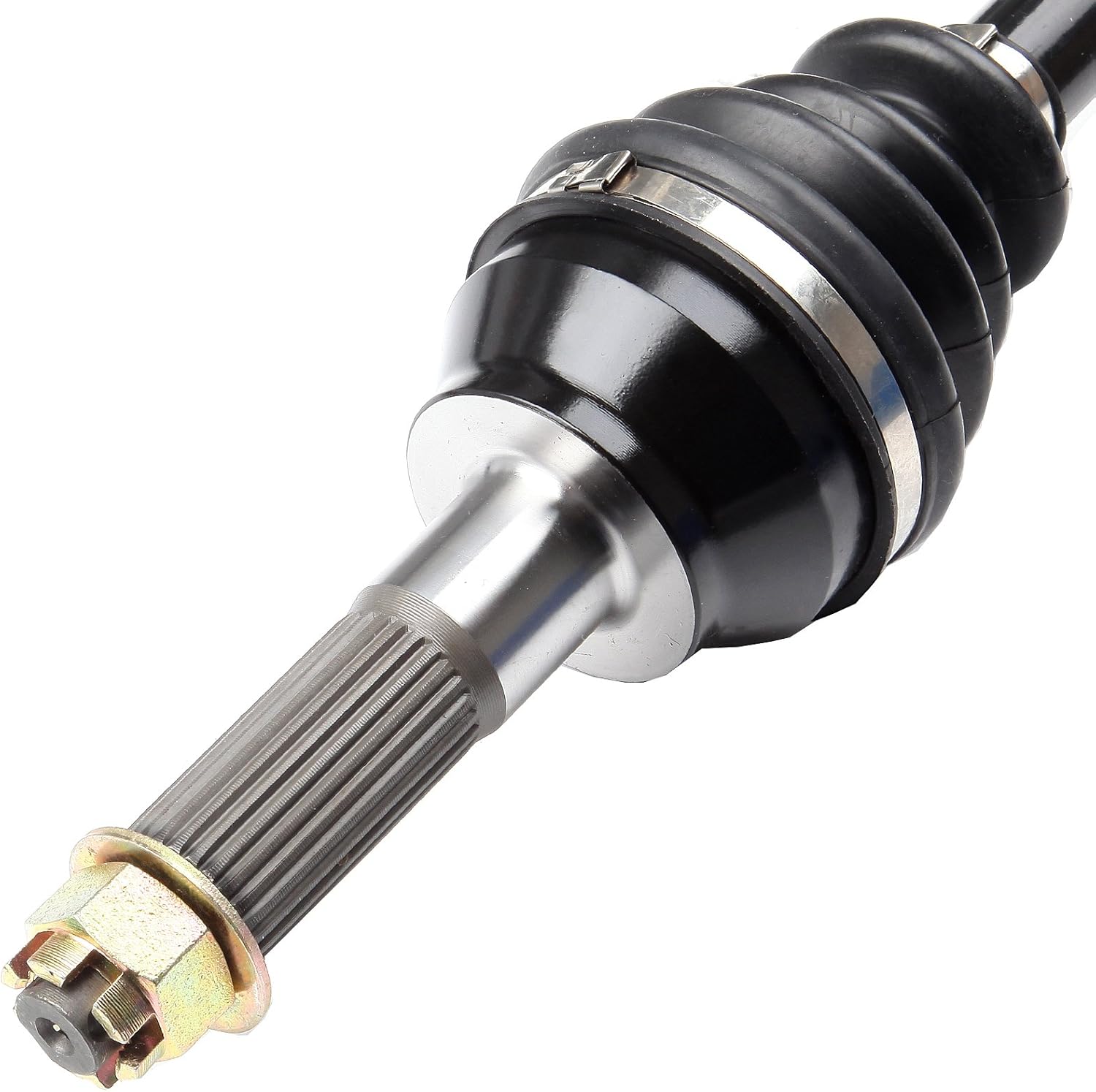
Imaj: Gwo plan view of the outer CV joint, showing the splines and the axle nut securely fastened.
Operating Functionality
The CV axle assembly is a critical component of your vehicle's drivetrain, responsible for transferring torque from the transmission to the wheels while accommodating the up-and-down motion of the suspension and steering angles. The constant velocity joints ensure that power is delivered smoothly and consistently, regardless of the wheel's position or angle.
Properly functioning CV axles contribute to stable handling, efficient power transfer, and a comfortable ride. Any issues with the CV axles can lead to noticeable symptoms affecting vehicle performance and safety.
Antretyen
Regular inspection and maintenance of your CV axle assemblies can help prolong their lifespan and ensure optimal vehicle performance. Pay close attention to the CV boots, as they are crucial for protecting the joints.
Recommended Maintenance Checks:
- Inspect CV Boots: Periodically check the rubber boots for any cracks, tears, or signs of grease leakage. Damaged boots can allow dirt and moisture to enter the CV joint, leading to premature wear.
- Koute bri yo: Pay attention to any clicking, popping, or grinding noises, especially when turning or accelerating. These can indicate a worn or damaged CV joint.
- Tcheke pou Vibrasyon: Unexplained vibrations, particularly during acceleration, might suggest an issue with the axle shaft or joints.

Image: Two new CV boots, which protect the CV joints from contaminants and retain lubrication.
Depanaj Pwoblèm komen yo
If you experience any of the following symptoms, your CV axle assembly may require inspection or replacement:
Symptoms and Potential Causes:
- Clicking or Popping Noise: Often heard when turning or accelerating, this typically indicates wear in the outer CV joint.
- Vibrasyon pandan akselerasyon: May suggest an issue with the inner CV joint or a bent axle shaft.
- Grease Leaks: Visible grease on the inside of the wheel or under the vehicle indicates a torn or damaged CV boot, which can lead to joint failure if not addressed.
- Body Shake or Uneven Tire Wear: Can be symptoms of severe CV axle issues, affecting vehicle stability and tire integrity.

Image: Visual representation of common ATV failures that may necessitate CV axle replacement, including body shake, damaged ball cage, disturbing noise, and tire wear.
Diagnosing CV Joint Noise:
To diagnose external CV joint wear, perform the following test:
- Put the vehicle in reverse gear.
- Turn the steering wheel all the way to one side.
- Drive slowly in reverse.
- Repeat the process with the steering wheel turned all the way to the other side.
If you hear a distinct clicking or rattling sound during this test, it is highly likely that the outer CV joint is worn and requires attention.

Image: Diagram explaining how to diagnose CV joint noise by checking for clicking or rattling sounds during steering and acceleration.
Espesifikasyon
| Karakteristik | Detay |
|---|---|
| Pozisyon | Rear Left and Right |
| Inboard Splines | 28T |
| Outboard Splines | 26T |
| Compressed Length | 675mm |
| Axle Nut Included | Wi |
| Pwa atik | 24.2 liv |
| Dimansyon pwodwi | 28.35 x 7.87 x 7.87 pous |
| Nimewo Pati Manifakti | 991759a |
| Nimewo OEM Pati | 1332814, 1332878, 1333008, 1590476 |
Enfòmasyon sou Garanti
Specific warranty details for this ECCPP CV Axle Drive Shaft Assembly are not provided in this manual. Please refer to the product packaging or contact ECCPP customer support for comprehensive warranty information.
Sipò pou Kliyan
Should you have any questions regarding the installation, operation, or maintenance of your ECCPP CV Axle Drive Shaft Assembly, or if you encounter any issues, please contact ECCPP customer support. We are committed to assisting you and resolving any concerns as quickly as possible.
For support, please refer to the contact information provided on the product packaging or the official ECCPP websit.
Ask a question about this manual
Ask about setup, troubleshooting, compatibility, parts, safety, or missing instructions. Manuals+ will review the question and use this page’s manual context to help answer it.